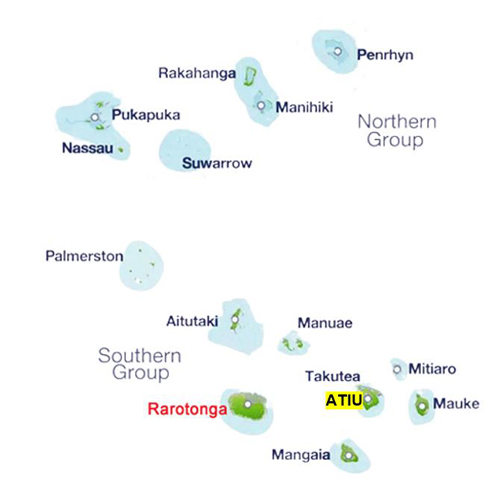
Photo: Atiu's own website
The Maori name for the island (Enua Manu) translates as 'land of the birds', and there are more on Atiu than any other island in the Cooks, including some very rare species. But even if you don't know a chaffinch from a chicken, there's plenty to see and do. Notched into the cliffs of fossilised coral (makatea) are over 28 small beaches, untouched and almost unvisited
Internal airline, Air Rarotonga operates several flights a week from both Rarotonga and Aitutaki. Flying time in each case is 45-50 minutes. And you can easily combine a trip to both islands. The plane usually passes en route over the country's two uninhabited islands, Manuae and Takutea
This is the third largest and third most visited of the Cook Islands. Typically there are around 50 visitors a month. Tourism is still in its infancy and with so few tourists, you can expect to treated more like a personal guest. The islanders also want their homeland to be a destination with a difference. Here's how they describe it:
"Atiu has positioned itself as an Eco-Island trying to attract the nature enthusiasts and those seeking a natural unspoilt island. This we do well with caves, secluded beaches, pristine tropical jungle, the weird shaped makatea, little commerce and very friendly people. We are trying to retain our differences from the rest of the world. This is hard to do. At best we are about 35 years behind the modern world and enjoying it. You will notice the refreshing difference"
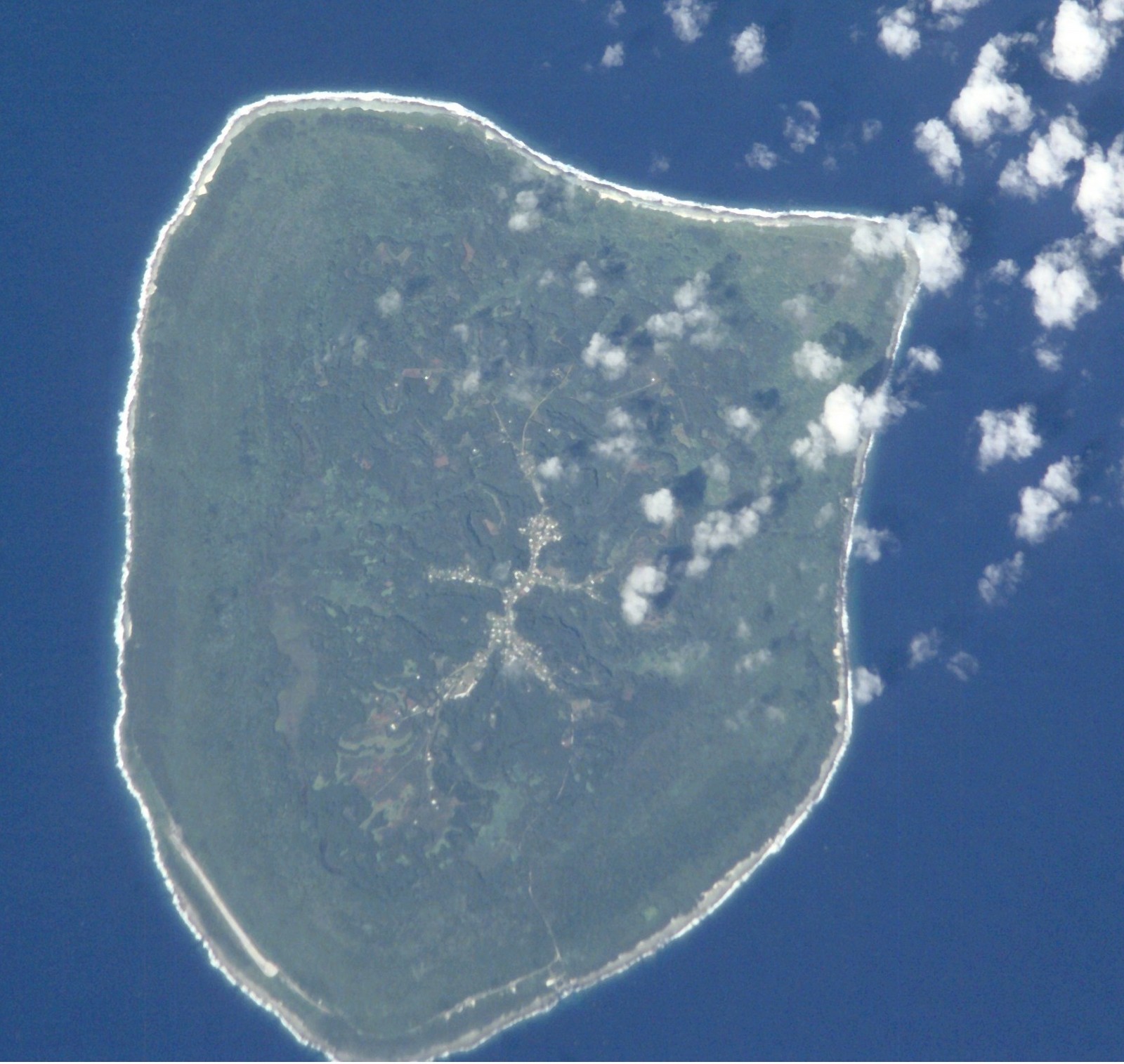
Atiu's five villages of Areora, Ngatiarua, Teenui, Mapumai and Tengatangi form a stick man figure in the centre of island.
Image courtesy of MODIS Rapid Response Project at NASA/GSFC
Man in the Middle!
Closer up...the island is far from busy. Why so many road signs are needed is a mystery
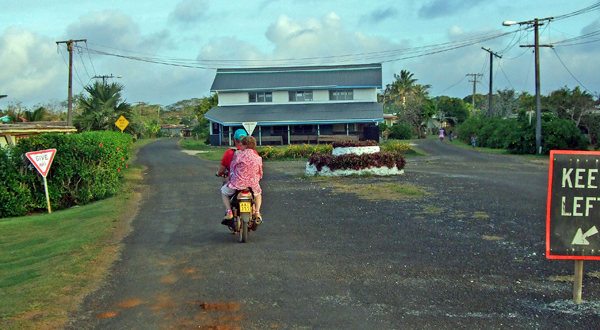
Closer up...the island is far from busy. Why so many road signs are needed is a mystery
Internal airline, Air Rarotonga operates several flights a week from both Rarotonga and Aitutaki. Flying time in each case is about 45 minutes. And you can easily combine a trip to both islands. The plane usually passes en route over the country's two uninhabited islands, Manuae and Takutea
This is the third largest and third most visited of the Cook Islands. Typically there are around 50 visitors a month. Tourism is still in its infancy, and with so few tourists you can expect to treated more like a personal guest. The islanders also want their homeland to be a destination with a difference. Here's how they describe it:
"Atiu has positioned itself as an Eco-Island trying to attract the nature enthusiasts and those seeking a natural unspoilt island. This we do well with caves, secluded beaches, pristine tropical jungle, the weird shaped makatea, little commerce and very friendly people. We are trying to retain our differences from the rest of the world. This is hard to do. At best we are about 35 years behind the modern world and enjoying it. You will notice the refreshing difference"
From the air, Atiu's five villages of Areora, Ngatiarua, Teenui, Mapumai and Tengatangi form a stick man figure in the centre of island.
Image courtesy of MODIS Rapid Response Project at NASA/GSFC
Closer up...the island is far from busy. Why so many road signs are needed is a mystery
I love this story even though it's almost certainly not true! Centuries ago, an islander spotted the bird from a distance and thought it was a peeka which is a Maori word for bat. He exclaimed: "Coo! Peeka" and that's how the bird got its name! :-)
I love this story even though it's almost certainly not true! Centuries ago, an islander spotted the bird from a distance and thought it was a peeka which is a Maori word for bat. He exclaimed: "Coo! Peeka" and that's how the bird got its name! :-)

Accommodation is limited. It includes self-contained bungalows, fully furnished cottages, a three bedroom house, an Airbnb and a group of six little villas (Atiu Villas) on the edge of the central plateau complete with swimming pool and evening restaurant. There's more information on Aitu's own website here Photo: Atiu Villas (which I can personally recommend) from their own website
These are just a few of the many rare and beautiful birds you might see on on the island. Discovering and learning about them was easy thanks to "Birdman George" (George Mateariki) who's in our picture at the top of this page but sadly he died just before Christmas, 2025.
George was known to generations of visitors
for his iconic bird watching and bush trail tours on which he shared his encyclopaedic
knowledge of his home island and its natural wonders. In 2007, he played a key role in resettling
27 endangered Rimatara lorikeets – the kura – onto Atiu. When mynah birds began
threatening the kura population, George was at the forefront of efforts between
2008 and 2014 to eradicate them, safeguarding the island’s native birds. And in
2016, his work gained international recognition when he was named one of just
15 global “Hotspot Heroes” by the Critical Ecosystem Partnership Fund (CEPF)
which honoured his outstanding conservation efforts. George, passed away at his
parents’ home in Areora, Atiu…but his legacy lives on.
All the bird photos are by Gerald McCormack whose Cook Islands Biodiversity and Ethnobiology Database is one of the most amazing pieces of work on the internet covering all forms of flora and fauna in the Islands. You can search it by clicking here
Pictured here are the "endangered" Rimatara Lorikeet whose red feathers island chiefs used to wear as a mark of their rank, the "moderately endangerd" Fruit Dove and the endemic Rarotonga Fly Catcher (kakerori) which has been brought back from the verge of extinction thanks to careful and continuing conservation management on Atiu. There were only 29 of the species left in 1989 but now there are more than 620
Coffee really does grow on trees in Atiu, it's totally organic Arabica and the Islanders are justly proud of their produce. The Atiu Coffee Factory also has a coffee tour during which you can learn how to process your own coffee and enjoy fire roasted coffee with coconut cream and pikelets (and if anyone from Staffordshire, England is reading this...yes, they're similar to the pikelets you get back home!)
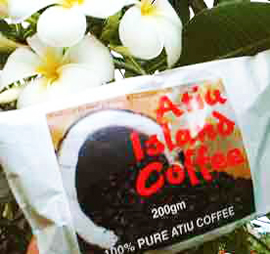
"Atiu Coffee" is one of two types unique to the Island and it's known as a gourmet variety in many parts of the world. It developed a special flavour as it survived and developed in the makatea with its calcium and phosphorus rich lowland soil until the 1950s, when a small coffee industry was started."Atiu Island Coffee" is produced by Mata Arai in the Atiu traditional method of roasting in coconut cream, although a gas commercial roaster has now replaced an open fire
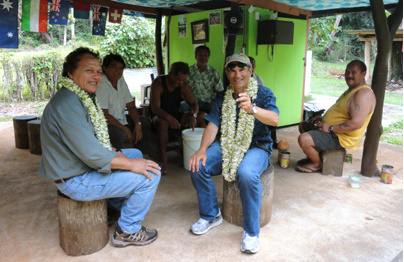
BUSH BEER is a lethal local conconction that dates back to pre-missionary days. And drinking it is a tradition that's now a tourist attraction. Atiu boasts seven tumunus or bush beer schools. Everyone gathers round a barrel which these days is more likely to be plastic than the hollowed out trunk of a coconut tree as in the old days. The "barman" hands out the drink in a coconut shell. Once emptied, it's handed back, refilled and passed to the next person...and so it goes on, round and round...a bit like the school itself after you've drunk a few shells-ful.
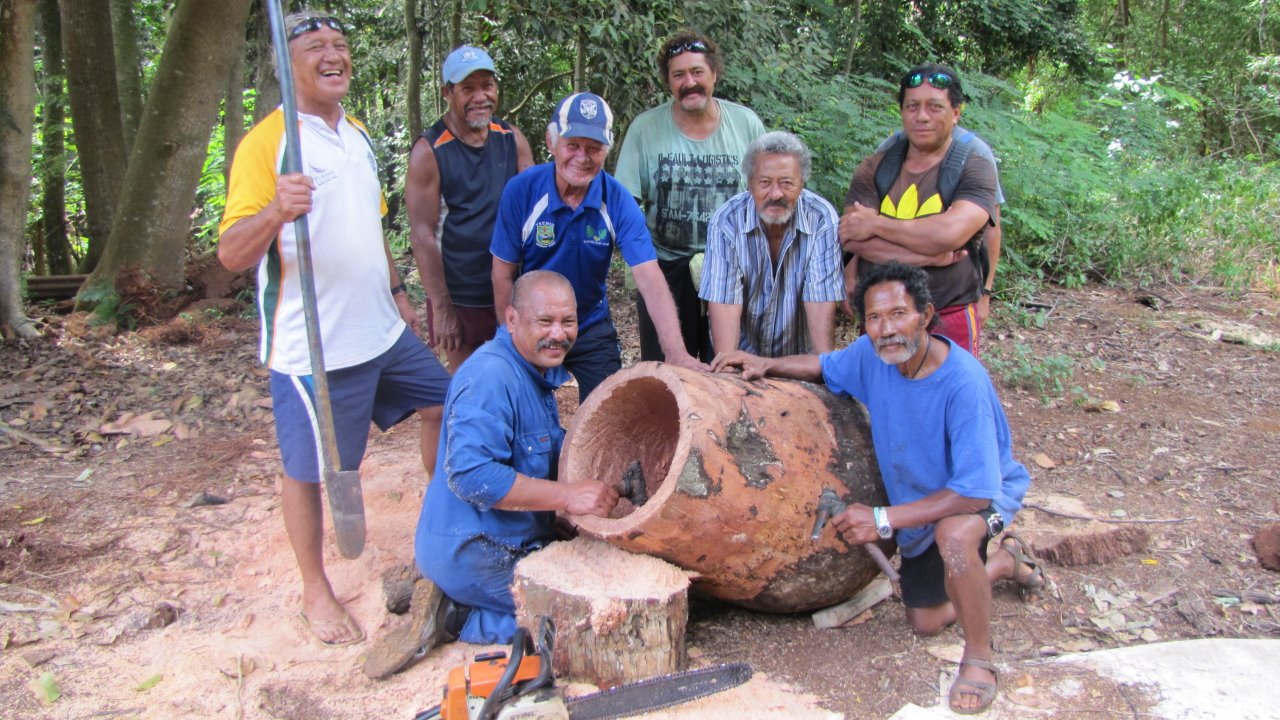
The old style: a hollowed out tree trunk
The drink itself is made either from fermented bananas or simply a home brew which is served very young. Either way, it's very alcoholic! When the barman taps his shell against the barrel, everyone falls silent for a short prayer and afterwards he introduces the drinkers to each other. Then everyone starts sharing stories about their own country and customs (hence why this is called a school), before the singing starts accompanied on ukeleles, guitars and the umba (a home made bass). There's no charge for the drink, but it's customary to compensate your hosts with at least NZ$5....or the equivalent in sugar!
Some advice from the Islanders of Atiu
"10 cups of the tumunu are good. Don't waste your holiday talking to the porcelain loudspeaker. More than 10 cups and you are really on your own. We do not know how good your liver is. You can limit the number of cups you have by missing a round. Raising your hand in a stop sign does this. Another technique is to indicate you wish to have small cups by showing a small vertical gap between your thumb and index finger"
With grateful acknowlegement to Atiu's own web site for additional information and some of the photos on this page